Corbett brings back elephant safari after seven years
Elephant safari resumes in Corbett Tiger Reserve after seven-year hiatus
- By Gurmehar --
- Monday, 22 Dec, 2025
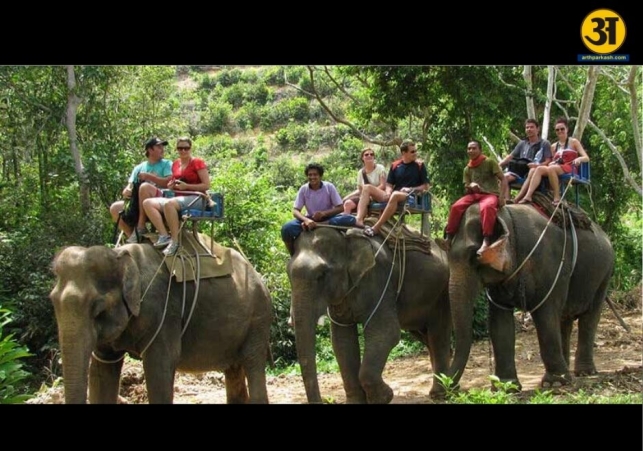
Elephant safari has finally returned to the Corbett Tiger Reserve (CTR) after a gap of seven years, bringing relief and excitement to tourists and local tourism workers. Officials confirmed that the safari resumed on Thursday, marking an important moment for one of India’s most popular wildlife destinations. For decades, elephant safari was a major attraction at Corbett, offering visitors a close and calm experience of the forest and its wildlife.
The restart of the safari comes after years of legal, administrative, and welfare-related discussions. While the service has resumed in a limited manner for now, forest officials said it could be expanded in the future depending on tourist response and operational feasibility.
Safari operations and booking details
According to Corbett Tiger Reserve director Saket Badola, the elephant safari will operate in two daily shifts—one in the morning and one in the evening. The safari will follow a “first come, first served” system, and bookings will be available at the respective zone booking counters rather than online platforms.
At present, three elephants have been deployed for tourism purposes. Out of these, two elephants are operating in the Dhikala zone, while one elephant is deployed in the Bijrani zone. Officials said the limited number is part of a cautious and controlled restart, keeping animal welfare and forest safety in mind.
Badola stated that the number of elephants could be increased gradually if the safari runs smoothly and tourist interest remains strong. However, any expansion will be done carefully and in phases, ensuring that elephants are not overworked and wildlife disturbance is kept to a minimum.
The duration of each elephant safari has been fixed at two hours. During this time, tourists will be able to travel a distance of at least five kilometres inside the forest. The safari routes have been clearly marked, and elephants will only be allowed to move on designated paths to avoid disturbing animals in sensitive areas.
Each safari trip will have a maximum capacity of five persons. Children below the age of five years will be allowed to join the safari free of cost. The fare has been fixed at ₹1,000 per person for Indian tourists and ₹3,000 per person for foreign tourists.
Forest officials believe that this pricing and capacity system will help manage crowds while ensuring a quality experience for visitors.
ALSO READ: Smart spending, smart growth: Harnessing public expenditure for India’s future
ALSO READ: PM-kisan 22nd instalment complete these mandatory steps to avail benefits
Ban, legal journey, and future plans
Elephant safari in Corbett was stopped in August 2018 after the Uttarakhand High Court banned the use of elephants for commercial purposes. The ban was imposed under the Prevention of Cruelty to Animals Act, 1960, and the Wildlife (Protection) Act, 1972. The court order followed a public interest litigation filed by the NGO Himalayan Yuva Gramin Vikas Sansthan, which raised concerns about animal welfare.
The ban came as a major blow to the local tourism industry. Wildlife guides, resort owners, and local workers said elephant safari was not only popular among tourists but also a source of livelihood for many families living around the reserve.
After repeated appeals by tourism operators, conservationists, and wildlife experts, the matter reached the Supreme Court. On January 29, 2019, the apex court lifted the ban, allowing elephant safari to resume under regulated and welfare-oriented conditions.
Despite the legal clearance, restarting the safari took several years. Officials said the delay was due to the need for clear operational guidelines, welfare checks, route planning, and coordination between forest departments and animal care teams.
The Corbett Tiger Reserve currently has 14 elephants, which are mainly used for forest patrolling, anti-poaching operations, rescue missions, and wildlife monitoring. Only a small number of these elephants have been assigned for tourism at present.
Badola said that if the safari continues responsibly and without incidents, more elephants could be added gradually for tourism use. He stressed that animal welfare remains the top priority and that elephants will not be used beyond their physical limits.
Tourism experts say the return of elephant safari could give a major boost to Corbett’s appeal, especially among visitors who prefer traditional and slow-paced wildlife experiences. Unlike jeep safaris, elephant safaris allow tourists to quietly move through dense forest areas and observe animals from close range without engine noise.
However, conservationists have also urged strict monitoring to ensure that elephants are treated ethically and that tourism does not disturb the natural balance of the reserve.
For now, tourists visiting Corbett are welcoming the return of this iconic experience, while officials remain cautious and focused on maintaining a balance between tourism growth and wildlife protection.
Related News